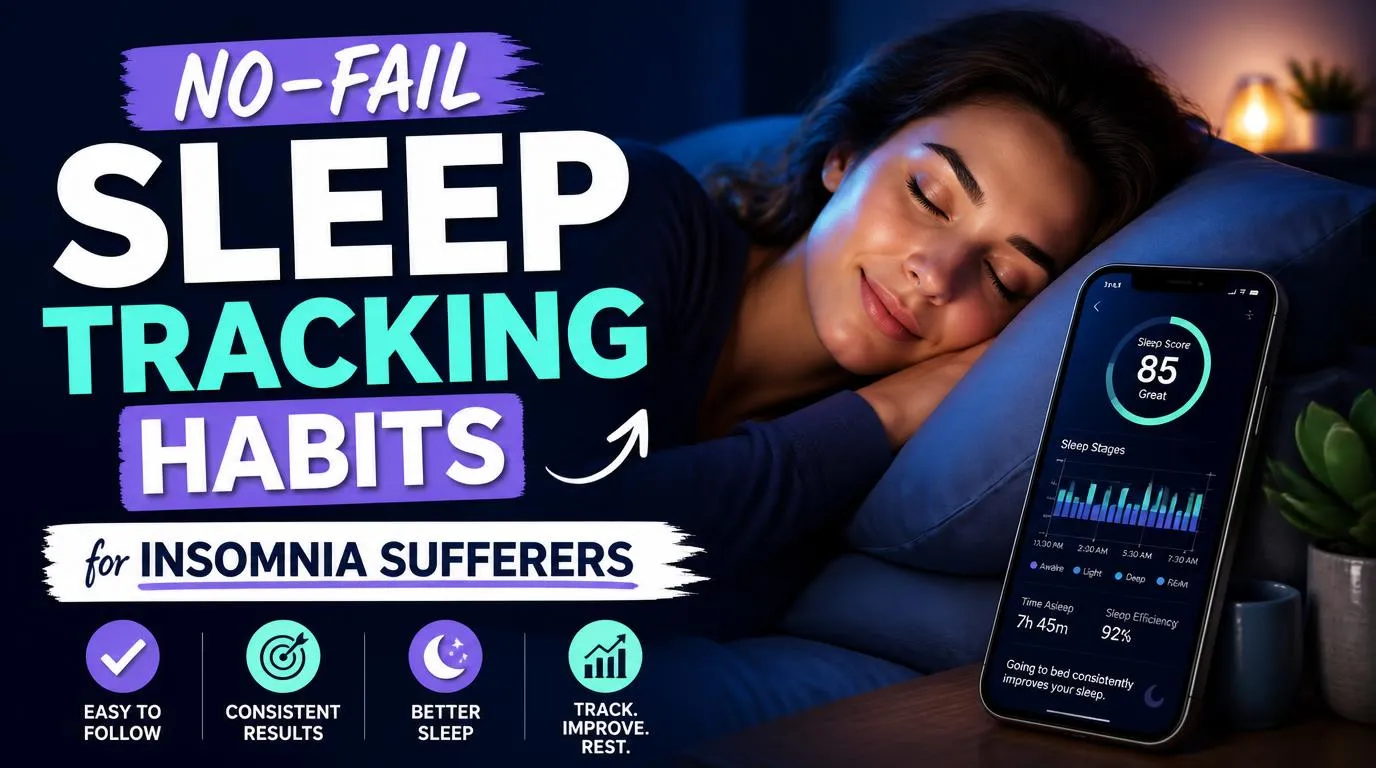
Starting your day by checking a sleep score is a recipe for disaster. If the app says you slept poorly but you actually feel okay, your mind will trick you into feeling exhausted. Instead, try tracking your subjective daytime energy levels on a simple scale of one to five. Log this in the afternoon, not the second you wake up. This shifts your attention away from clinical metrics and back onto how your body actually functions. I used to let a “poor” sleep score ruin my entire morning until I realized my body felt perfectly fine before I looked at my phone. Stop letting an algorithm dictate your mood.
Adopt No-Fail Sleep Tracking Habits for Insomnia Sufferers Daily
Establishing a healthy routine with your wearable device requires strict boundaries. Wearable tech like the Oura Ring or Apple Watch can be incredibly useful, but only if you use them passively. The secret to implementing this routine is to turn off all real-time sleep notifications on your devices. Put your device on charge during your wind-down hour so you are not tempted to look at step counts or heart rate variability right before bed. Let the device collect data in the background while you focus on relaxing. When you remove the pressure of performing for your tracker, your central nervous system can finally settle down enough to let sleep happen naturally.
Hide the Clock and Wearable Screens at Night
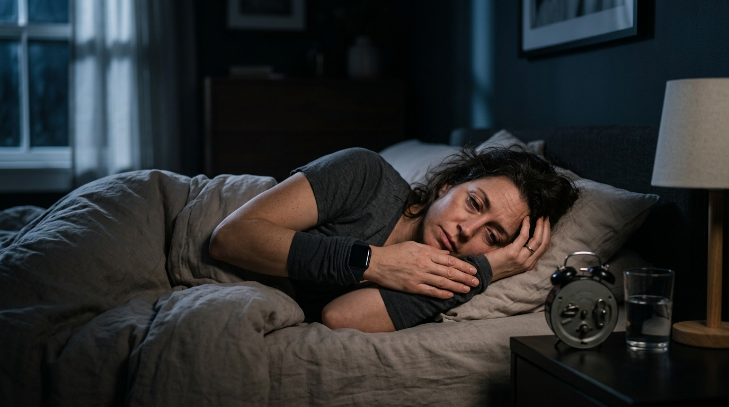
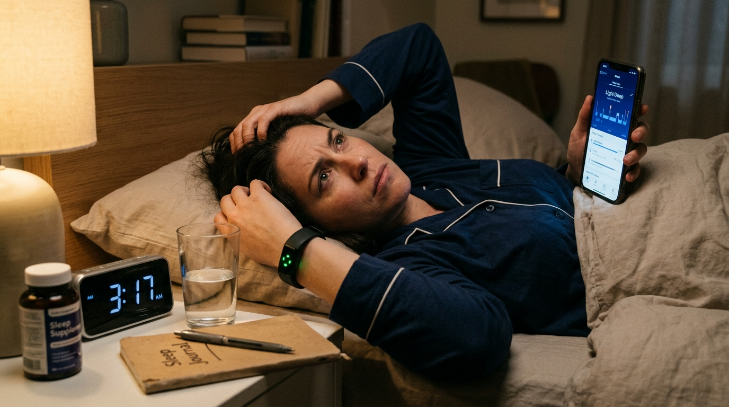
Watching the minutes tick by during a bout of sleeplessness is a form of self-torture. When you look at a glowing screen at 3 AM, your brain instantly calculates how many hours of sleep you have left, triggering a massive spike in cortisol. Cover your smartwatch face with a sleep sleeve or turn on theater mode to keep the screen completely dark. Face your bedside clock toward the wall or put it in a drawer. You only need an alarm to wake you up, not a constant reminder of how long you have been awake. Trust me, not knowing the exact time during a wakeful period is incredibly liberating and dramatically reduces the time it takes to fall back asleep.
Track Consistency Over Sleep Duration
Focusing on getting exactly eight hours of shut-eye is a trap that keeps you awake. Insomniacs often obsess over total sleep duration, but sleep consistency is far more important for regulating your circadian rhythm. Use your tracker to monitor your sleep onset and wake-up times, aiming for a thirty-minute window of variance. Even if you sleep poorly, wake up at your designated time to keep your body clock locked in. Over time, this consistency builds sleep drive, making it easier to fall asleep the following night. I spent months chasing duration before focusing on schedule stability, and that single shift did more for my chronic insomnia than any sleep aid ever did.
Log Environmental and Behavioral Triggers
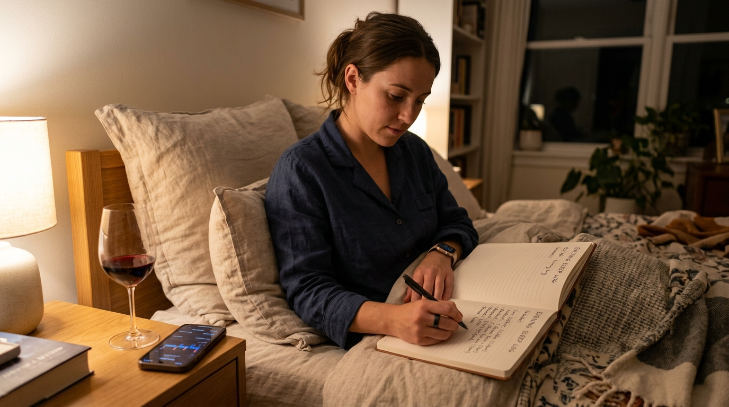
Raw sleep data means absolutely nothing without context. If your tracker shows high restlessness, you need to know what caused it, which is why tracking variables like late caffeine, alcohol, or intense workouts is crucial. Create a quick, two-second evening log to note these variables before you sleep. You will quickly notice patterns, such as how that innocent glass of wine at dinner wrecks your deep sleep phase four hours later. Identifying these links helps you make lifestyle adjustments based on real personal data rather than generic advice. It turns sleep tracking from a source of stress into an empowering, practical science experiment.
Use a Weekly Review System Instead of Daily Staring
Checking your metrics every single morning is the fastest way to build sleep anxiety. High-stress sleepers benefit most from looking at their data in weekly aggregates rather than daily scores. Pick one day a week, perhaps Sunday morning, to open your app and review the seven-day trends. Applying these no-fail sleep tracking habits for insomnia sufferers in a weekly format protects your mental peace. Look at your average resting heart rate, deep sleep percentages, and sleep efficiency across the entire week. This macro view smooths out the inevitable bad nights that everyone experiences, preventing you from panicking over a single rough Tuesday.
Integrate a Simple Paper Backup Diary
Sometimes, high-tech sensors do more harm than good for an overactive mind. If digital trackers make you feel like you are under a microscope, temporarily ditch the tech for a physical sleep diary on your nightstand. Keep a paper notebook nearby and spend thirty seconds filling it out every morning. Only write down when you went to bed, roughly how long it took to fall asleep, and how many times you woke up. This physical act of writing externalizes your thoughts and keeps you from getting sucked into dopamine-inducing smartphone screens first thing in the morning. IMO, a hybrid approach of using digital tracking for background data and paper for daily reflection is the ultimate balance.
Calibrate Your Tracker for More Accurate Results
Most consumer wearables fail to distinguish between lying completely still in frustration and actual light sleep. If you suffer from psychophysiological insomnia, you likely spend long stretches lying awake but motionless, which confuses your tracker into logging sleep. To fix this, calibrate your device by setting your actual bedtime window manually inside the app rather than letting it guess. Adjust the sensitivity settings if your platform allows it, or cross-reference your wearable’s data with your subjective journal notes. Knowing that your tracker has a margin of error helps you take its daily metrics with a healthy grain of salt. Do not treat wearable data as an absolute, objective truth when it is actually just a highly educated guess.
Ignore the Sleep Stage Percentages Entirely
Obsessing over whether you got enough deep or REM sleep is a quick path to orthosomnia which is tracker-induced sleep anxiety. Consumer trackers use heart rate and movement algorithms to estimate sleep stages, but these estimates are often highly inaccurate compared to clinical brainwave monitoring. Worrying because your app says you only got forty minutes of deep sleep is completely useless and only drives up your stress hormones. Letting go of these inaccurate metrics is one of the most effective no-fail sleep tracking habits for insomnia sufferers trying to reclaim their peace of mind. Focus instead on your total sleep time and how refreshed you feel during the day. As long as your total sleep is stabilizing, your brain will naturally regulate its own sleep stages without you needing to micro-manage them.
Differentiate Sleep State Misperception from Real Insomnia
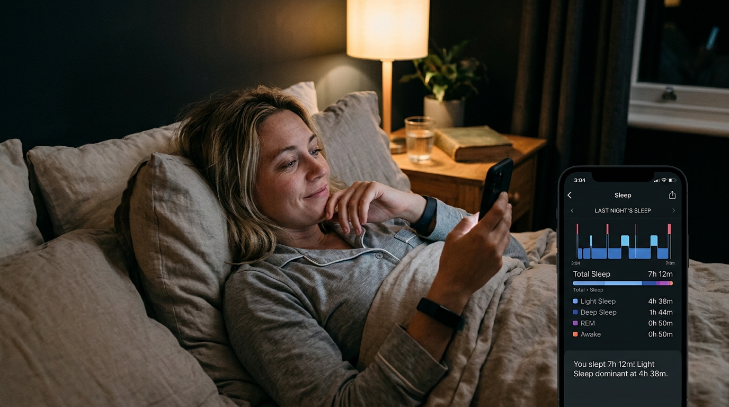
Many people who struggle to sleep actually get far more rest than they realize. This phenomenon, known as sleep state misperception occurs when your brain remains partially active during light sleep, making you feel wide awake when you are actually sleeping. Using a tracker can actually be incredibly reassuring here, as it often proves you slept for several hours when you swore you were awake all night. Seeing this visual proof helps rewrite the anxious narrative in your head that you cannot sleep. Use this data as comfort rather than a test score. Over time, realizing that you are getting some light sleep reduces the bedtime panic that fuels chronic insomnia.
Set a Hard Deadline to Stop Tracking Altogether
Tracking your sleep should always be a temporary diagnostic phase not a lifelong sentence. The ultimate goal of learning these habits is to eventually reach a point where you do not need to track anything at all. Set a hard deadline, perhaps four to six weeks, to gather your baseline data, make your lifestyle changes, and then put the tracker in a drawer. True sleep recovery means going to bed without thinking about sensors, scores, or algorithms. Use the tool to identify your triggers, stabilize your schedule, and then trust your body to take over. You do not need a piece of plastic on your wrist to tell you that you slept great.
Frequently Asked Questions
Can sleep tracking make insomnia worse?
Yes, obsessing over perfect data can cause orthosomnia, a state of anxiety about sleep metrics that actually keeps you awake. This is why setting boundaries and prioritizing subjective daytime energy over app scores is essential when using these tracking tools.
What is the most accurate way to track sleep?
While consumer wearables are convenient, a professional polysomnography test in a clinical lab is the only fully accurate method. For home use, pairing a passive wearable with a paper sleep diary gives you the most balanced, stress-free picture of your nightly rest.
How do I choose the best sleep tracker for insomnia?
Look for a device that operates passively without screens or frequent notifications, like a ring or a screenless band. The best trackers allow you to turn off daily score alerts, helping you implement no-fail sleep tracking habits for insomnia sufferers without triggering bedtime anxiety.
Should I track my sleep if I have severe sleep anxiety?
If checking your metrics makes your heart race, put the digital tracker away for a few weeks. Focus on a low-stress paper log instead, or practice sleeping without any tracking devices until your baseline bedtime anxiety decreases.
Conclusion
Reclaiming your nights is not about achieving a perfect score on an app, but about building trust with your own body. Start small, set firm boundaries with your technology, and remember that a bad night of sleep is never the end of the world. What is the first habit you are going to try tonight?