Flipping your screen to monochrome removes the dopamine rush triggered by bright app badges. App designers specifically engineer notification red to spike your adrenaline and prompt compulsive taps. Stripping the color makes Instagram look like an old newspaper.
You can set this up on iOS or Android by triple-clicking your side button through accessibility shortcuts. Suddenly, your brain stops treating your home screen like a shiny toy chest. That visual friction gives your nervous system an instant breather.
2. The Physical Doorway Boundary
Walking through a doorframe while holding your phone usually keeps your mind trapped in digital noise. Place your phone on a side table whenever you enter a new room, especially bedrooms and kitchens. This physical boundary signals your brain that the environment demands real presence.
I started leaving my device on the hallway console before stepping into my kitchen to cook. My chronic urge to refresh Slack vanished during dinner prep because the phone sat ten feet away. Establishing spatial boundaries forces you to consciously choose when you engage with screens.

3. The Five-Tap Notification Audit
Constant banner alerts keep your nervous system in a low-grade state of fight or flight. Open your device settings right now and silence alerts for every app except direct messages from actual humans. News updates, game reminders, and shopping promos do not deserve access to your peace of mind.
Muting non-essential pings stops external algorithms from dictating your focus throughout the workday. I turned off all food delivery and news app badges three months ago, cutting my daily pickups in half. Reclaiming attentional autonomy keeps anxious spirals from starting over meaningless retail promotions.
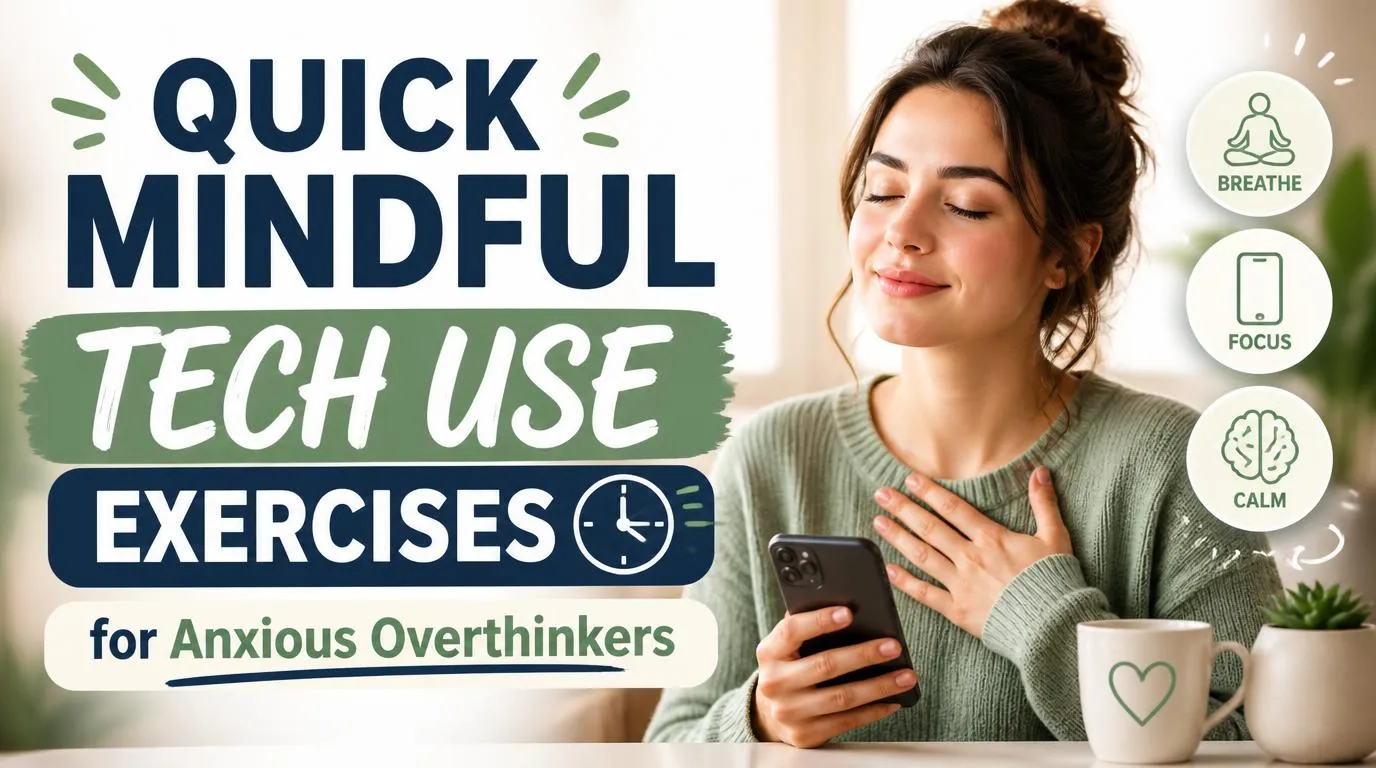
4. Quick Mindful Tech Use Exercises for Anxious Overthinkers: The Three-Breath Screen Pause
Most of us open our phones out of pure nervous habit rather than actual purpose. Pause for three deep belly breaths every time your hand touches your screen before entering your passcode. This brief pause breaks the automated reflex loop that triggers overthinking loops.
During those six seconds, ask yourself whether you actually need information or just want a distraction. You will often realize you reached for the phone simply because a quiet moment felt uncomfortable. Adopting a mindful pause creates space between an emotional impulse and your digital reaction.

5. The 60-Second Tab Purge
Staring at thirty open browser tabs creates background cognitive strain that drains your energy. Set a digital timer for sixty seconds and ruthlessly close any tab you have not touched today. If an article genuinely matters, bookmark it into Pocket and close the window immediately.
Overthinkers tend to hoard open tabs as a safety net against forgetting ideas. In reality, that visual clutter constantly reminds you of unfinished tasks you cannot handle right now. Performing a rapid tab reset clears your visual field and restores mental clarity within seconds.
6. The Haptic Vibration Silence
Phone vibrations on your desk or in your pocket mimic an urgent tap on the shoulder. Switching your device from vibrate to total silence removes phantom buzzing sensations and false alarms. Your body stops bracing for incoming demands every thirty seconds.
Try scheduling two specific windows during the afternoon to check missed calls or team updates. Knowing you have dedicated check-in slots prevents the nagging dread that you are missing an emergency. This silent mode practice trains your nervous system to stay grounded in physical reality.

7. The Purpose-First Search Protocol
Typing a query into Safari or Google Chrome often leads down rabbit holes of anxiety. Speak your exact intention out loud before your fingers touch the search bar. Saying the phrase out loud anchors your attention to that single, original task.
Anxious minds easily drift into related articles, comment sections, or scary forums when left unguided. Vocalizing your goal creates an auditory commitment that stops aimless wandering across the web. Using intentional search keeps you from drowning in irrelevant details and manufactured worries.
8. The Pocket-Free Morning Walk
Morning walks lose their grounding power when your hand constantly grips a vibrating phone. Leave your device on your kitchen counter during your first ten-minute walk outside each day. Letting your eyes track distant horizons rather than glowing glass relaxes your optic nerve.
Overthinkers desperately need moments without incoming stimulation to process lingering morning worries naturally. Feeling the outdoor breeze without a podcast playing lets your thoughts settle on their own terms. This unplugged movement routine builds genuine resilience against mid-morning screen fatigue and cognitive overload.

9. The One-In-One-Out Social Media Rule
Following hundreds of accounts fills your feed with conflicting opinions, lifestyle comparisons, and dread. Implement a strict rule where following a new profile requires unfollowing an existing one immediately. This simple maintenance habit keeps your information diet lean, healthy, and manageable.
Audit your current following list and purge accounts that leave you feeling inadequate or irritated. Keeping a tight, curated circle protects your mental bandwidth from unnecessary digital outrage. Prioritizing feed curation ensures your social apps inform you without triggering spiraling thoughts.
10. The Bedside Charging Station Eviction
Keeping your charger on your nightstand invites late-night doomscrolling and fitful sleep patterns. Move your charging dock across the room or into another room entirely before you get into bed. Replacing screen time with an analog book helps your brain produce natural melatonin.
Buy a cheap analog alarm clock so you never need your smartphone to wake up on time. Waking up without glowing notifications in your face lets you start your day calmly. This bedroom sanctuary habit eliminates the midnight urge to check work emails or read distressing news.
11. The Single-Tasking Fullscreen Mode
Juggling multiple split-screen windows splits your cognitive focus and amplifies nervous tension. Expand whatever document or task you are working on into fullscreen mode on your computer. Hiding your dock, desktop clutter, and side apps removes tempting distractions.
Overthinking thrives when your brain spots five different half-finished projects in your peripheral vision. Focusing on one window allows deep immersion without the background anxiety of pending messages. Embracing fullscreen focus simplifies your digital workspace so your mind can work in peace.
12. The App Timer Reality Check
Built-in screen time limits often get dismissed because we tap ignore without thinking. Set custom daily limits on your most problematic apps and pair them with an intentional friction passcode. When the lockout screen appears, use that moment to stand up and stretch your shoulders.
Practicing quick mindful tech use exercises for anxious overthinkers works best when software reinforces your human intentions. That sudden app shutdown acts as an objective mirror, revealing how long you spent lost in cyberspace. Setting firm digital boundaries helps you snap out of compulsive loops before anxiety sets in.
13. The End-of-Day Desktop Shutdown Ritual
Leaving work software running overnight keeps your brain anchored to tomorrow’s deadlines and worries. Spend the final three minutes of your workday closing every application and shutting down your laptop completely. Physically pressing the power switch signals a definitive boundary between labor and rest.
These simple, quick mindful tech use exercises for anxious overthinkers turn chaotic screen habits into grounding anchor points. Taking control of your digital shutdown routine prevents evening work stress from bleeding into your dinner and personal relaxation. Establishing a shutdown ritual gives you permission to disconnect fully without feeling guilty.
14. The Airplane Mode Deep Work Sprint
Attempting complex projects while receiving notifications creates chronic mental fragmentation and stress. Toggle airplane mode on your devices for forty-five minutes whenever you need unbroken concentration. Informing your close team about your temporary focus block eliminates the fear of being unreachable.
Our brains produce better ideas when freed from the anticipation of sudden message pings. You will finish tasks much faster and experience far less mental fatigue by the afternoon. Practicing an offline sprint protects your cognitive energy and builds deep confidence in your daily productivity.
Frequently Asked Questions
How quickly do quick mindful tech use exercises for anxious overthinkers show results?
You will notice a drop in physical tension within the first five minutes of applying friction. Breaking the immediate urge to tap your screen lowers heart rate spikes caused by incoming notifications. Consistency across several days rewires your baseline response, making calm focus your new digital default habit.
Will setting app limits make me miss important personal emergencies?
Not if you configure your emergency bypass settings correctly on your phone. iOS and Android allow you to whitelist immediate family members and specific phone calls while silencing everything else. This setup gives you complete peace of mind without exposing your brain to social media chaos.
What should I do when I compulsively reach for my phone out of boredom?
Keep a physical substitute within arm reach, such as a pocket notebook, a pen, or a stress ball. When the physical urge strikes, grab the analog item and take two deep breaths. This redirects your nervous energy without feeding the algorithmic dopamine loop that drives digital overthinking.
Can I use these techniques if my job requires being online all day?
Yes, because these exercises focus on managing cognitive load rather than quitting the internet. Implementing fullscreen modes, closing unused browser tabs, and scheduling batch communication times keep you productive at work. You protect your mental energy while still meeting every professional expectation and deadline seamlessly.
Is going completely cold turkey on social media better for anxiety?
Abruptly quitting social platforms often triggers intense rebound cravings and social isolation worries for overthinkers. Building sustainable micro-habits and mindful friction works far better over the long term. Small, consistent boundaries let you enjoy modern connectivity without sacrificing your daily peace of mind or emotional stability.
Conclusion
Learning to handle your screens with calm intention takes a little practice, but your nervous system will thank you every single day. Start by picking just one simple exercise from this list to try before bedtime tonight. Which micro-habit are you going to test first to tame your digital anxiety?