
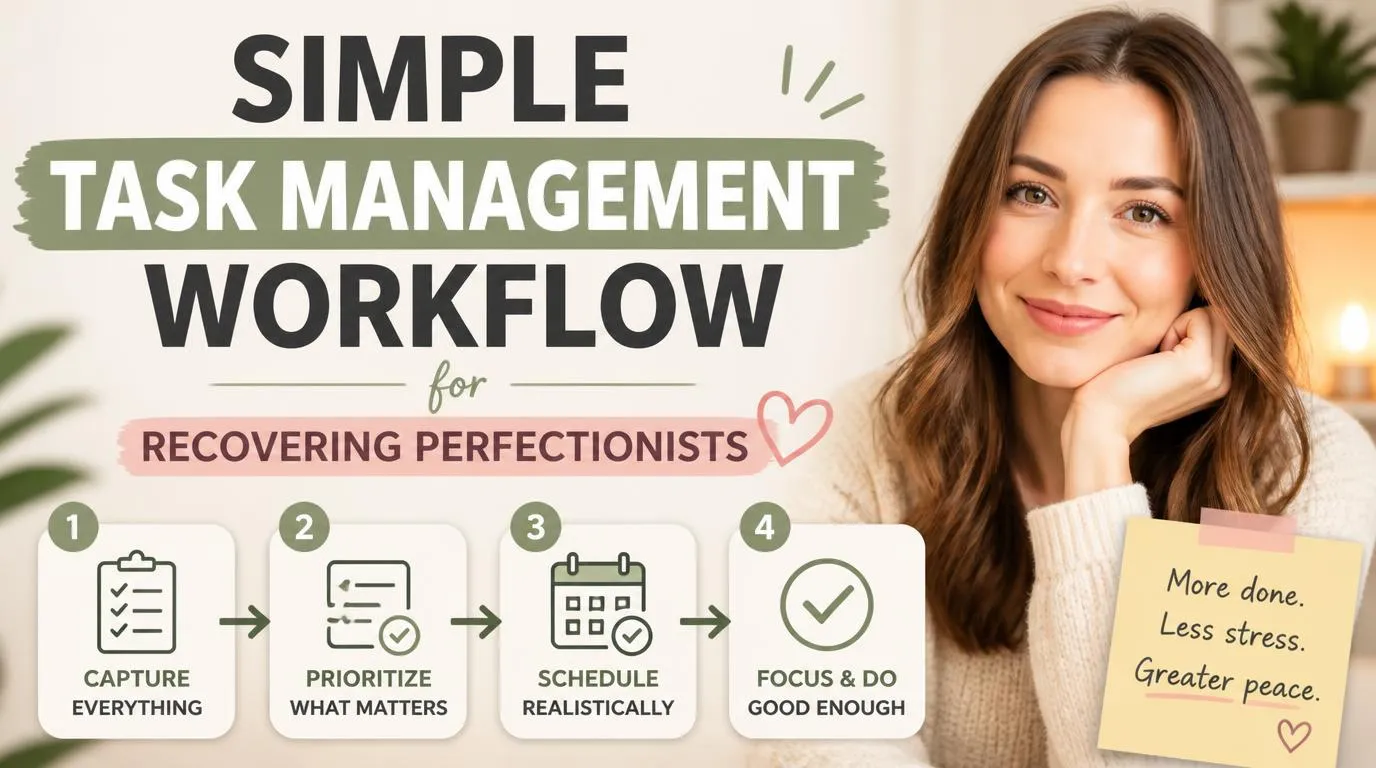
Perfectionism is not a badge of honor; it is a highly effective form of procrastination. We love to build complex databases, organize tasks by priority, sub-priority, and aesthetic color-coding, and then feel too exhausted to actually start. When your system requires maintenance just to exist, the system is broken.
My turning point came when I realized I spent three hours setting up a gorgeous dashboard in Notion, complete with custom icons and nested databases, only to ignore it the very next day. It was beautiful, sterile, and utterly useless.
A minimalist approach strips away the performance of being busy and forces you to face the actual work. By removing the pressure to create an immaculate system, you free up the mental energy needed to take action. This pragmatic workflow is about lowering the bar so you can finally cross the finish line without crying in the process. We do not need more features. We need fewer places to hide from our actual tasks.
Step 1: Commit to a Daily Brain Dump
Starting your day with a cluttered mind is a recipe for paralysis. When every single thought, chore, and project idea bounces around inside your skull, everything feels equally urgent. This is why you must get everything out of your head and onto a blank page immediately.
Do not try to organize this list yet. Just write down every single thing screaming for your attention, from paying the electricity bill to writing that major project proposal. I prefer using a cheap, physical pocket notebook for this because it lacks distracting notifications or formatting options. If you must go digital, a plain text file or a basic draft in Apple Notes works beautifully. The goal here is simple: externalize your anxiety so you can look at it objectively. Once the thoughts are on paper, they lose their terrifying power over your morning focus.

Step 2: Ruthlessly Apply the Rule of Three
Once you have a giant list of fifty tasks, your perfectionist brain will want to do them all today. Resist this urge with everything you have. Instead, you are going to select exactly three high-priority tasks for the day.
These three tasks should be the only things that matter. If you complete them, your day is a total success, even if you spend the rest of the afternoon staring at the wall. Selecting only three items forces you to confront your physical limitations. You cannot do it all, and pretending you can only leads to burn-out and shame. I use Todoist to pin my daily three, keeping everything else hidden in an Inbox folder out of sight. Limiting your daily horizon is how this simple task management workflow for recovering perfectionists keeps you from burning out before lunchtime.
Step 3: Define Your “Good Enough” Criteria
Perfectionists love to polish a project long after it has reached diminishing returns. We spend forty-five minutes choosing the perfect font for a slide deck or rewriting an email intro six times. To stop this cycle, you must define what a finished task actually looks like before you begin writing or coding.
Before you touch a keyboard, write down a quick, bulleted list of basic requirements. For a blog post, it might be: five hundred words, three subheadings, and one featured image. Once those boxes are checked, the task is officially complete, and you must move on. This prevents the endless loop of editing and tweaking that keeps you stuck in place. Done is better than perfect because perfect is an illusion that keeps you broke and stressed. Trust that your average work is still highly valuable to everyone else.

Step 4: Time-Box Your Action Items
Parkinson’s law states that work expands to fill the time available for its completion. If you give yourself all day to write a single report, you will spend all day agonizing over it. Time-boxing cures this by forcing you to work within strict, artificial boundaries.
Set a physical timer on your desk for forty-five minutes. During this block, your only job is to make mess-filled progress on your current task. No checking emails, no grabbing snacks, and absolutely no cleaning your desk. When the timer rings, you must stop, even if you are in the middle of a sentence. Taking regular, scheduled breaks keeps your brain fresh and prevents the hyper-focus trap. I highly recommend a simple, analog visual timer that shows the red disk disappearing as time slips away. It adds a gentle sense of urgency that bypasses your inner critic.
Step 5: Embrace the Power of Frictionless Capturing
A major pitfall for those of us who overthink is trying to organize tasks the exact second they pop into our heads. When you are deep in a writing flow and suddenly remember you need to buy dog food, do not open your main task app to file it under Personal, Shopping, or Urgent.
Instead, jot it down in a raw capture tool and keep moving. A capture tool must be incredibly fast to access, like a sticky note on your desk or a quick widget on your phone home screen. You are not organizing; you are merely capturing. Sticking to a simple task management workflow for recovering perfectionists means keeping your active work hours separate from your planning hours. Deal with the dog food list later during your daily wrap-up, not while you are trying to write a client proposal. Keep your creative brain and your administrative brain completely separate.

Step 6: Perform a Weekly Reset Instead of Daily Critiques
Daily productivity reviews are a trap for perfectionists. They quickly devolve into a self-flagellation session where you criticize yourself for everything you failed to accomplish. Instead, limit your reflections to a single weekly reset session.
Every Friday afternoon, take twenty minutes to clean up your workspace, review your digital inbox, and plan the upcoming week. Ask yourself what worked, what got in your way, and where you overcommitted. This weekly review gives you the distance needed to spot patterns without getting bogged down in daily guilt. It is also the perfect time to archive completed tasks and move unfinished ones back to your main backlog. Treat this weekly reset as a gentle conversation with a friend rather than a performance review with a hostile boss.
How to Handle Setbacks Without Abandoning the System
The moment a perfectionist misses a day on their habit tracker, they tend to throw the entire system out the window. If the system cannot be executed perfectly, we decide it is not worth doing at all. This all-or-nothing mindset is your worst enemy.
If you have a chaotic week where you do not look at your task list once, do not scrap your workflow. Simply open your notebook, do a massive brain dump, select three things, and start again. A resilient system is one that allows for human messiness. Your tools exist to serve you, not the other way around. When you accept that some weeks will be completely disorganized, you strip away the shame that keeps you stuck. Progress is a winding staircase, not a straight, upward line.

Frequently Asked Questions
What is the best task management tool for a perfectionist?
The best tool is always the one that offers the least amount of customization. When you use complex platforms, you spend more time configuring databases than doing actual work. I recommend starting with a simple paper notebook or basic apps like Google Tasks or Todoist to keep your focus entirely on action.
How do I stop overcomplicating my daily to-do lists?
Stop writing down every minor detail of your day. Your to-do list should only contain tasks that move your projects forward, not reminders to drink water or brush your teeth. If you find yourself listing twenty minor micro-steps, delete them and focus solely on the high-level outcomes.
What should I do when my daily list of three tasks feels too overwhelming?
When three tasks feel too heavy, shrink them down even further. Break your main task into a tiny, laughably easy starting step. Instead of writing “Draft client proposal,” change it to “Write the client’s address.” Once you take that first micro-step, momentum will usually take care of the rest.
How long does it take to get used to a simple task management workflow for recovering perfectionists?
It generally takes about two to three weeks of consistent practice to feel comfortable with this approach. You will constantly feel the urge to add color-coding, sub-tasks, or complex tags back into your system. Resist that temptation, stick to the basics, and let the relief of finished work convince you.
Conclusion
Letting go of the perfect productivity system is terrifying, but it is the only way to actually get things done. Trust this minimalist process, embrace the messy drafts, and give yourself permission to be beautifully average today. What is one tiny task you are going to write down and cross off your list right now?