

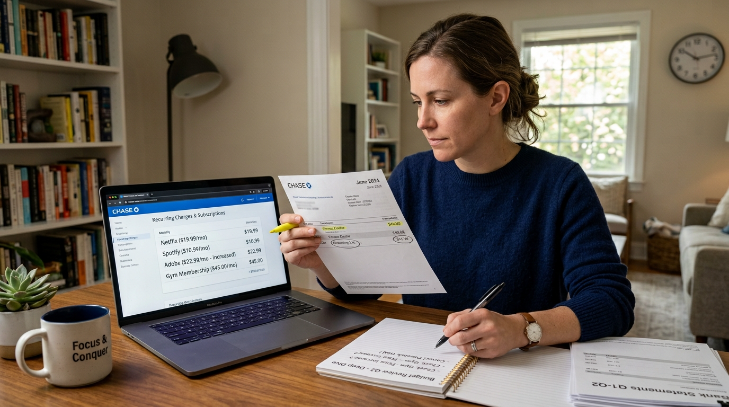
Grab a highlighter and download PDF statements from every checking account, credit card, and digital payment wallet you own. Looking at only one month gives you an incomplete picture because many charges slip past unnoticed on irregular billing cycles.
Log into PayPal, Apple Subscriptions, and Google Play to catch third-party billing agreements that bypass standard bank descriptions. You will likely spot odd merchant names like “DRI*” or obscure holding companies for apps you downloaded eight months ago and forgot existed. Building an accurate recurring transaction trail across all accounts prevents stray charges from surviving the purge. Highlight every single fee that recurs automatically, regardless of how tiny the charge looks on paper.
Flag the Sneaky Annual and Quarterly Renewals
Monthly recurring fees get all the attention, but annual renewals inflict the most brutal damage on a tight budget. An unexpected $140 software renewal or warehouse club fee will completely blow up your planned debt payment for the week.
Check your primary email account by searching keywords like “annual renewal,” “subscription confirmed,” and “membership invoice.” Create a dedicated list of these annual charges alongside their exact renewal dates. This simple step breaks the calendar billing trap that catches so many budgeters off guard. When you know an annual fee is due in three months, you can cancel it today before the system bills your card automatically.

Apply the Brutal 30-Day Usage Test
Be relentlessly honest about what you actually used over the last four weeks versus what you only intended to use. Many of us keep paying for services because we love the aspirational version of ourselves who reads five business magazines and does daily digital pilates.
Review each highlighted item on your list and ask whether you touched it in the past thirty days. If you did not log into that language-learning app or fitness membership all month, you are throwing away cash that belongs on your credit card balance. Conducting this usage reality check frees you from paying for fantasy habits while your real debt gathers compound interest. You can always sign up again later if your routine genuinely changes.
Budget Friendly Subscription Audit Tips for Debt Payoff Plans
Executing budget friendly subscription audit tips for debt payoff plans requires treating every saved five-dollar bill as debt acceleration fuel. Group all your non-essential recurring charges into clear buckets: entertainment, convenience, digital storage, and lifestyle memberships.
Convenience apps often disguise themselves as essential time-savers when they actually encourage extra spending. Premium delivery passes, rideshare perks, and meal kit services trick you into spending more money just to justify their monthly membership fee. Eliminating convenience spending targets the exact leaks that keep debt balances high. Applying budget friendly subscription audit tips for debt payoff plans gives you immediate breathing room without requiring a side hustle.

Trade Paid Apps for Free Community and Open-Source Alternatives
You do not need to abandon digital media or everyday productivity tools when phenomenal free options already exist. Replacing paid subscriptions with free tools allows you to maintain your lifestyle while directing cash toward your debt snowball.
- Download Libby or Hoopla to borrow free audiobooks, eBooks, and comics directly through your local public library card.
- Switch from paid office software suites to free platforms like Google Docs or LibreOffice.
- Replace premium workout subscriptions with high-quality fitness channels on YouTube.
Adopting these zero-cost alternatives lets you trim thirty to fifty dollars each month from software alone. Your debt payoff plan speeds up instantly when you stop paying for features that public institutions and open-source developers provide for free.
Rotate Streaming Platforms Instead of Stacking Them
Paying for Netflix, Hulu, Disney+, Max, and Paramount+ at the exact same time is basically reinventing expensive cable television. Most households only watch one or two shows on a specific network before letting the app sit idle for weeks.
Pick one streaming platform to watch this month and cancel all the other active entertainment packages. When you finish the specific season or movies on that service, cancel it and activate a different platform next month. Adopting a single-stream rotation slashes your monthly entertainment bill by roughly sixty dollars while keeping your viewing lineup fresh. You never run out of great shows to watch, and your debt balances drop much faster.

Call Providers to Negotiate or Trigger Retention Offers
Hitting the cancel button on digital accounts often prompts an automated discount window designed to keep you from walking away. Companies spend heavy marketing dollars acquiring customers, so they routinely offer steep discounts rather than losing you entirely.
Log into accounts you genuinely want to keep, like internet access or satellite radio, and start the cancellation workflow. Many platforms will immediately offer a promotional fifty percent discount for the next six months just to keep your account open. For utility and service providers, call customer service directly and explain that you are cutting non-essentials to pay off debt. Securing these retention discounts lowers your fixed baseline costs without forcing you to sacrifice services you rely on daily.
Reroute Recovered Dollars Straight Into Your Debt Snowball
Money freed up from cancelled services will vanish into random purchases if you do not immediately assign it a job. The entire point of trimming subscriptions is knocking out debt balances, not expanding your weekend dining budget.
Add up the exact dollar amount you recovered from your audit and set up an automated payment toward your target balance. If you cut seventy-four dollars in monthly subscriptions, schedule a recurring seventy-four dollar transfer to your principal balance on payday. When budget friendly subscription audit tips for debt payoff plans turn into automated debt allocation, your balances drop steadily every single month. Small recurring cuts create massive compound progress over time.
Frequently Asked Questions
How often should I review my recurring bank charges?
Run a quick check every three months and a deep review twice a year. Subscription costs creep back up easily when free trials expire or promotional rates end. A quarterly checkup catches surprise price increases before they quietly eat away fifty or sixty dollars of your monthly debt budget.
Will budget friendly subscription audit tips for debt payoff plans feel too restrictive?
Not if you replace paid services with free community options. Swapping a paid fitness app for YouTube workouts or borrowing digital media from your local library keeps your entertainment alive. The goal is removing waste, not stripping every shred of joy from your daily life while paying off balances.
What is the best way to handle subscriptions hiding inside digital wallets?
Open your Apple ID or Google Play settings directly on your phone to view active recurring charges. Many app purchases never show a clear merchant name on your standard bank statement. Managing them through the phone operating system gives you one-click cancellation without hunting down forgotten passwords.
Is pausing a subscription better than outright cancellation?
Cancelling outright is almost always better when paying down debt. Pausing keeps a mental attachment alive and leaves a scheduled restart date that catches you off guard later. You can always sign back up in sixty seconds if you genuinely miss the service after thirty days.
How much extra cash can this process free up each month?
Most people find between $75 and $200 hiding in unused software, stacked streaming apps, and forgotten delivery memberships. Redirecting that amount toward a high-interest credit card can easily shave six to twelve months off your repayment timeline and save hundreds in interest.
Conclusion
Trimming away subscription bloat is one of the fastest ways to put real cash back into your debt payoff plan without working extra hours. Every ten dollars you claw back from an unused app puts you one step closer to total financial freedom. Which sneaky subscription are you going to cancel first?